Week Three: Connection Without Expectation
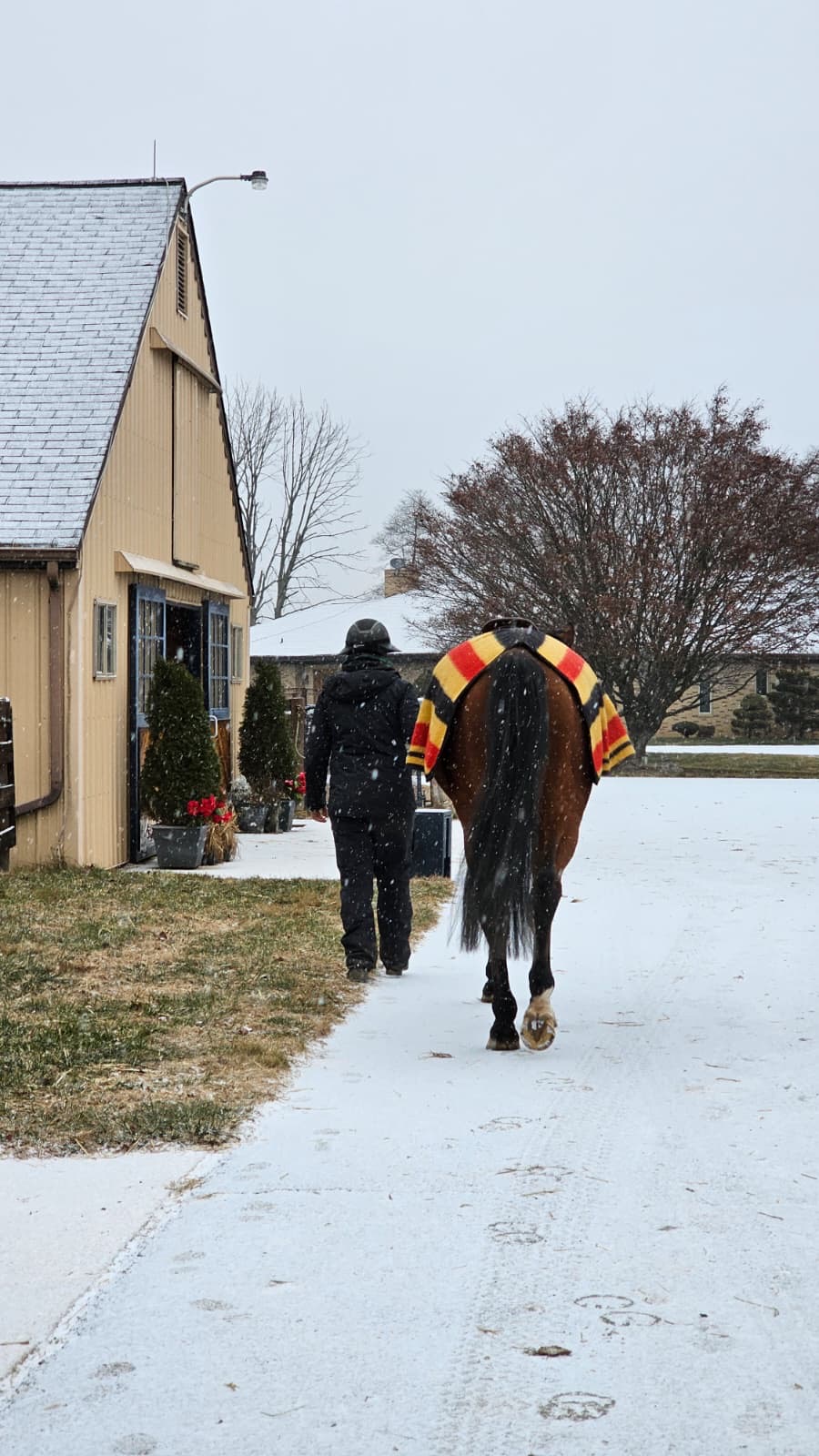 With our first snowfall already tucked behind us and a 13°F morning that felt straight out of a Christmas card, the barn has taken on that magical December hush. The kind where the water buckets steam, the horses’ coats sparkle with frost, and the whole place feels stitched together with its own string of quiet lights. This season always reminds me: Christmas isn’t found in the busy parts. It’s hidden in moments like these, where we slow down long enough to notice the beauty standing right next to us.
Seeing the world around us.
Now, this week I wanted to encourage the idea of turning the barn into your playground of awareness. Think of it as a gentle scavenger hunt for connection, curiosity, and a few laughs.
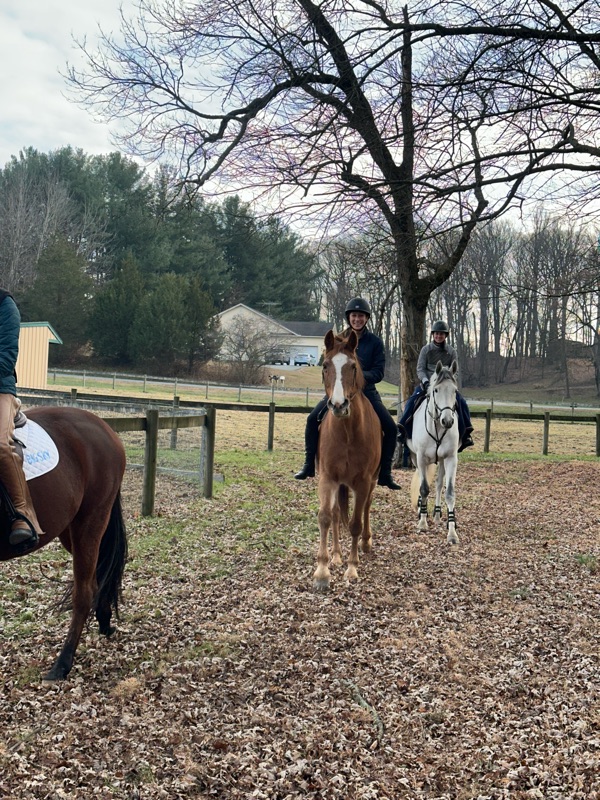
This week I had the joy (and cardio workout) of going on a trail ride—on foot. Yes, on foot. You do what you gotta do when you’re trying to convince a nervous rider and a 25-year-old mare that “adventure” is not a dirty word.
Stephanie was terrified—and I mean “almost wet the bed” terrified—about taking her mare Reegan on what I like to call the 50-foot trail ride. Now, I lie. Boldly. It’s not 50 feet. It’s more like… “enough distance to question your life choices but not enough to justify a snack break.” The alternative route is a solid 10+ minutes of walking, versus 3–5 minutes between grass bites. Efficiency!
I also may not have mentioned that it’s not exactly flat. But listen—Steph and Reegan absolutely had it in them. I knew it, even if they didn’t yet.
The best part? We had reinforcements. Chrissy on her gelding Blue and Erin on Vert—who also happens to be one of Reegan’s field mates. Nothing says emotional support like a familiar mare who also thinks she’s the main character.
As we started, I told Steph to look around. Really look. Notice the beauty. The frozen poop piles in the field (stunning, a true winter sculpture series). The muddy gates that were pristine before horses moved in a month ago (RIP to that era). The woods, the fallen trees, the world as Reegan sees it.
Because here’s the truth:
If you want to be a good leader—or even a safe follower—you have to be aware.
If you’re nervous and all you’re watching is your horse’s radar ears, you’re basically making them do crowd control, security patrol, and emotional labor while also carrying you. That’s a big ask for a prey animal who thinks squirrels are suspicious.
And for my experienced riders—trail riders, fox hunters, my cousin who collects trail rides like passport stamps—here’s a fun observation next time you’re out:
Watch the ears.
- Lead horse: Ears forward. Alert. Heroic. The one who gets all the cute photos.
- Middle horse: Ears out to the sides. Listening for danger left and right. The hall monitor of the group.
- Rear horse: Ears tipped back and sideways, sweeping behind. The one on lion-and-bear duty. The caboose. The unsung hero with confidence for days.
It takes real bravery to bring up the rear. If you’ve ever watched the rump horse, they’re the quiet, steady ones who make sure everyone else gets home safely. And half the time, they don’t get the credit.
Yesterday wasn’t about mileage. It wasn’t about conquering mountains (literal or emotional). It was about learning to see what your horse sees, breathe where they breathe, and share the world instead of just riding through it.
The Invisible Observation
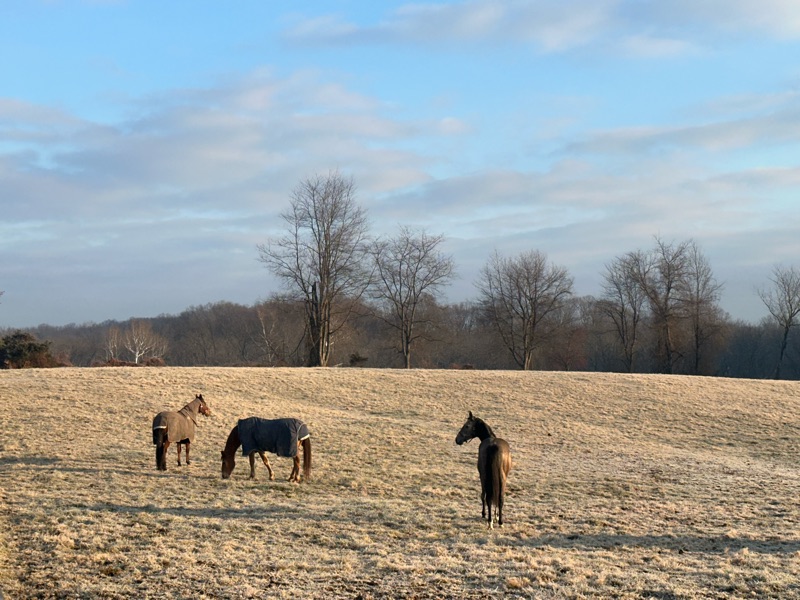
If any of y’all follow me on Instagram, you already know I have a slight obsession with watching horses in their little herds. And if it doesn’t seem like an obsession, that’s only because I spare you from the sheer volume of videos I take every single day. Trust me — if I posted everything, you’d think I lived in the bushes with binoculars.
Still, my favorite part of the morning has become this quiet window of time with Junebug.
After turnout, when the girls have gotten their buck-and-fart energy out — heads tossing, tails up, that wild two minutes that reminds you horses still carry the whole history of the world inside them — things finally settle. By then I’m headed out to the back 40 with grain for the four retired horses. It’s always the same little ritual: open the tin, scoop the grain, waddle down the slope that feels steeper when your arms are full.
And without fail, the moment that tin pops open, Junebug hears it.
From halfway across the pasture, her head shoots up like she’s just been assigned a top-secret mission. She glances at the other mares, pretends she’s casually drifting, and then quietly peels off. She truly believes she’s sneaking and thinks she’s invisible, slipping through the grass like a ninja.
And to be fair… she mostly is.
Except Clover is on to her. Clover watches her like, “Ma’am. What is this shady behavior.”
But why does Junebug sneak at all?
Because at the end of her sneaky little journey I always slip her a handful of grain and pet her.
And here’s the thing I love about this tiny ritual:
I get to watch her being herself. Just being a horse — following her curiosity.

Try this sometime:
• Sit or stand somewhere your horse can see you, but you’re not asking anything of them.
• Let them just… be. Grazing, shaking, rolling, sighing.
• And then jot down one thing you notice that you’ve never seen before.
Call it your silly little “aha!” moment — the kind that makes you feel more connected to your horse, the land, and the simple rhythm of their day.
Because sometimes the best part of horsemanship happens when they forget we’re watching.

Observing Body Language: What Our Horses Already Know
If anyone ever filmed my morning routine, the footage would look like a chaotic mix of tripping over frozen divots, fumbling with stubborn gate chains, and realizing—yet again—that I forgot the scissors to cut open the hay bales. Honestly, it would probably qualify as a nature documentary about an uncoordinated professional horse girl.
But inside my head? Very different story.
Because while I’m doing all that glamorous winter choreography, I’m also watching the horses move through their morning in a way that feels almost… poetic. I’ll catch myself mesmerized by the quiet communication happening in the field. Horses have this incredible ability to exist in a shared language of safety and harmony—one we rarely give ourselves time to notice.
When they graze together, they’re attuned to more than grass. And when they decide to trot or canter across the field, they move like a flock of birds—no bumps, no arguments, no “you cut me off” moments. Just pure, instinctive awareness.
No honking. No turn signals. No mid-movement staff meetings.
It’s beautiful.
And it always leads me to the same question: Can I be that kind of presence in my horse relationships?
A lot of the times when I bring horses in from the paddocks, it’s in pairs—which sounds simple until you’ve actually tried escorting two equines through a doorway built for one, my “observation of them working together” usually turns into me muttering, “No, wait… hey—that’s me you’re pushing… no, go around the gate… yes, that gate… oh my god, have you two never walked anywhere together in your entire lives?” Meanwhile they look back at me with that, innocent expression horses reserve for moments when they are absolutely the problem but refuse to admit it and it started with, me?
As an example when I bring Andy and Khali in each morning, I’d love to think I’m communicating, Hey guys, I’m a steady leader. You can trust me. Let’s walk in together like civilized beings. But sometimes the reality is… Khali shoulder-checking me to speed up, or Andy stopping to grab “just one bite” of grass like a kid sneaking cookies before dinner.
And the funny thing?
They don’t do that with one another other. Horses have an energy language and a boundary that they enforce without words, it's felt.
So it makes me wonder what gets lost in translation when the horse–horse language meets the human–horse one. Where does my intention blur? What signals am I giving without realizing? Is it inconsistency? A wandering mind? The fact that my attention is half on the lead rope, half on the coffee waiting for me back at the barn?
Maybe I’m not giving them the same clarity they give each other.
Maybe I’m not present enough for them to commit.
Or—and this one stings a little—in my rush to “get chores done,” maybe I forget that the walk in from the field is part of the relationship, not a pause before one.
Sometimes I think maybe they’re pulling me back to being—to the quiet, voiceless space where communication isn’t spoken, but felt.
And honestly? That’s a pretty good place to practice living, too.
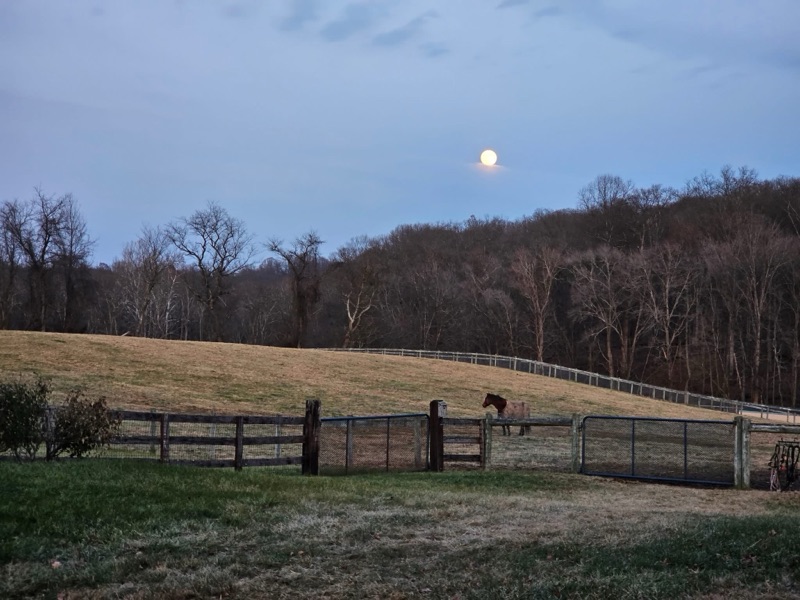
Herd Watching Assignment
Grab a coffee (or a Celsius) , plant yourself somewhere non-obvious, and just… watch.
Observe:
• who initiates movement
• who yields and who leads
• how spacing changes
• how they “talk” without talking
Take mental notes. Don’t analyze—just absorb.
Understanding their language makes your own quieter, steadier, and more hopefully effective.
Gratitude Minute
Before leaving, rest your hand on their withers. Think—actually think—of one thing you’re grateful for with this horse. It changes the energy you carry into the next ride more than any exercise ever will.

No Training Agenda Day
One thing I’ve learned as a professional rider: never—and I mean never—say, “I’m just going out for a quick ride.” The universe hears that, taps your horse on the shoulder, and suddenly they remember every athletic trick they’ve never once shown in their entire lives. Next thing you know, you’re blinking back tears of laughter (or fear… or both) trying to find a safe spot to finish the ride and preserve what’s left of your dignity.
So on the days when I know time is tight—maybe 30 or 40 minutes tops—I head out with zero agenda. I check the buttons I know work, take a little read on where my horse is that day, and then I plan my graceful exit. If there’s something serious to teach, fix, or discuss, I save it for a day when the clock isn’t breathing down my neck. Because when a lesson actually matters, it ALWAYS takes the time it takes… and oddly enough, when you give it that space, it usually goes faster.
On the flip side, if I hop on and in 15 minutes everything feels golden, I don’t keep poking around looking for something to fix. Don’t dig for problems. Don’t manufacture homework. Win your battles this season, and don’t go to war.
Winter adds layers—literally. Cold air, tight backs, missed days from bad weather, and riders who are half-frozen and dreaming of heated tack rooms. So if you skip a ride or two? Don’t panic. Get on with no expectations. Let your horse move. Breathe. Feel grateful for the few warm minutes you get together. Notice the tiny tries and let that be enough.
A “no training agenda day” isn’t avoiding work—it’s acknowledging the season, the moment, and the partnership. And sometimes, that’s exactly the training your horse needs most.

Holiday Reminder:
Slowing down now isn’t wasted time—it’s mental training, emotional connection, and a gift to yourself and your horse. Enjoy the laughs, notice the small moments, and remember: the holidays are best experienced, not scheduled.
xx- P
#minfulnesshorsemanshipjourney #seethebeautyaroundyou #gratitudeforthejourney
Bonus:
Podcast: How Spacial Awareness Affects Your Training
YouTube: Salt River Wild Horses
Reading/Audible: Michelle Payne ‘Life As I Know It’
Don't forget, I'm just an email away, let me know what inspires you too!


Comments
Post a Comment